Reviewing the New Home SVG for Embroidery
As a designer who spends half my life digitizing and the other half stitching, I have learned to look past the glossy preview images. When a client asks for a housewarming gift or when I am stocking my own small shop with seasonal items, the file source matters just as much as the thread choice. Recently, I evaluated Congratulations on Your Lovely New Home., a digital asset marketed toward crafters and Etsy sellers. While it is sold primarily as a vector graphic within the Crafts and Graphics categories, its utility for embroidery projects requires a specific, critical eye. This review breaks down how this design translates from screen to fabric, focusing on real-world application rather than just aesthetic appeal.
First Impressions and Visual Personality
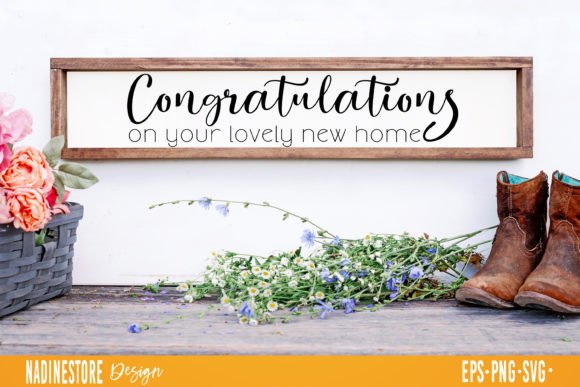
The immediate mood of Congratulations on Your Lovely New Home. is warm and inviting. It avoids the sterile, corporate feel that plagues many generic housewarming quotes. The layout suggests a balance between modern typography and traditional sentiment, which is crucial for handmade products. For an embroidery designer, the first question is always about complexity. Since the zip-archive includes a PNG with a transparent background, an SVG, and an EPS10 file at 12x12 inches, we are dealing with a scalable vector graphic. This is excellent for resizing, but it does not automatically mean it is ready for the needle.
The visual personality leans towards clean lines. In a digital context, this looks sharp. However, in embroidery, clean lines can sometimes translate to jagged edges if the stitch density is not managed correctly during the digitizing phase. The design’s simplicity is its greatest strength for beginners but also its biggest trap for professionals who might overlook the need for proper underlay stitches.
Real-World Application: The Tote Bag Test
To truly understand the value of this asset, I imagined a common scenario: a custom order for a boutique client launching a line of home goods. The project was a heavy canvas tote bag, intended as a premium housewarming gift. Using Congratulations on Your Lovely New Home. as the central motif, the goal was to create something that felt personal yet professional.
Because the file is provided as an SVG and EPS10, I had full control over the scaling. I resized it to fit a 5x7 hoop area, leaving ample margin for the bag’s seams. The transparency of the included PNG allowed me to quickly mock up the design on different fabric colors in Photoshop before committing to thread. This step is vital for any craft business owner. Seeing how the text interacts with the natural beige of unbleached cotton versus a stark white helped determine the final thread palette. I opted for a deep navy satin stitch for the main text to ensure high contrast and readability.
Stitching Considerations and Fabric Compatibility
When moving from a digital embroidery file to actual stitching, the substrate dictates the success. This design performs exceptionally well on stable fabrics like denim, canvas, and twill. These materials support the weight of the stitches without puckering. However, caution is required when applying this to stretchy fabrics or thin materials.
If you plan to use this on a sweatshirt or baby clothes, the lack of inherent structure in the vector file means you must rely heavily on your stabilizer. A cut-away stabilizer is non-negotiable for knit fabrics to prevent the design from distorting after washing. For delicate items like tea towels or pillow covers, a lightweight tear-away might suffice, but test stitches are mandatory. The 300 DPI resolution of the PNG ensures that if you are using it for printable mockups or heat transfer vinyl overlays, the edges remain crisp. But for machine embroidery, the vector data must be properly digitized into a stitch file format compatible with your machine.
Navigating Small Details and Hoop Sizes
One potential pitfall with quote-based designs is letter spacing. In Congratulations on Your Lovely New Home., the flow of the text needs to be checked at smaller sizes. If you shrink this below 4 inches for a cap or a small embroidered patch, the finer details of the letters may merge. Satin stitches have a maximum width before they become unstable; if the digitizer converts thick parts of the font into wide satin columns without split stitches or fill stitches, the threads may snag or loop.
For curved surfaces like caps, the design’s linear nature works well, but you must account for the curvature. Placing the text too close to the seam can cause distortion. I recommend centering the design and ensuring that the stitch density is reduced slightly on the edges to prevent pulling on the fabric’s grain.
Commercial Viability and Brand Consistency
For Etsy sellers and small shop owners, the versatility of this asset is a major selling point. It fits seamlessly into various product lines: holiday embroidery for winter moves, personalized gifts for spring real estate closings, or even as part of a broader home decor collection. The professional look of the design enhances brand consistency. When customers receive a finished product that looks polished, trust in your craft business grows.
However, commercial use requires diligence. Before selling finished items or digital products derived from this file, you must confirm the licensing terms. The description mentions it is for crafts and graphics, but explicit commercial rights for resale of the digital file versus the physical embroidered item can vary. Always read the license included in the zip archive. Assuming you have the right to use it for commercial embroidery projects, this design offers high perceived value. It feels bespoke, which allows for higher pricing tiers in your shop.
Practical Designer Notes
Before you load this into your machine, follow these practical steps to ensure quality:
- Test on Scrap Fabric: Never stitch directly on your final garment. Use the same fabric type and weight to check for puckering or thread breaks.
- Check Thread Contrast: Use the transparent PNG to overlay the design on photos of your actual fabric stock. Ensure the thread colors you choose stand out against the fabric texture.
- Review Stitch Density: If you are digitizing this SVG yourself, pay attention to dense areas. Too much fill stitch can make the fabric stiff and uncomfortable, especially on wearable apparel.
- Confirm Hoop Size: While the file is 12x12 inches, ensure your machine’s hoop can accommodate the size you intend to stitch. Resize proportionally to maintain aspect ratio.
- Inspect Small Details: Zoom in on the vector file. Look for tiny anchor points or stray nodes that might cause unnecessary jumps or trims in the embroidery process.
- Mockup in Black and White: Remove color from your preview. If the design loses its legibility in grayscale, it will likely fail on low-contrast fabric combinations.
In conclusion, Congratulations on Your Lovely New Home. is a solid foundation for various embroidery projects. It bridges the gap between digital convenience and tactile craftsmanship. By respecting the limitations of the medium and preparing your files correctly, you can transform this simple graphic into a high-quality, sought-after handmade product. Whether for a single personalized gift or a batch of boutique merchandise, this design holds up under scrutiny, provided you approach it with the precision of an experienced maker.